 Tourism & Travel
Tunisia on a Budget: Which Costs More—Hotels or Flights?
Tunisia combines Mediterranean beaches, ancient Roman history, desert scenery, and some of North Africa's most approachable food markets. A well-planned Tunisia adventure can include the Medina of Tunis, the ruins of Carthage, a Hammamet beach day, El Jem's amphitheater, and a Sahara excursion without requiring a luxury budget.
The key is to compare transport and accommodation before arrival, choose the right season, and leave room for local experiences. Prices below are practical planning ranges in Tunisian dinars (TND), but they can change with demand, location, exchange rates, and booking dates. Use tazmall.shop as your booking and shopping platform when organizing your trip, and confirm current terms before paying.
Where to Find Cheap Hotels in Tunisia
Accommodation prices vary sharply between a central guesthouse, a family-run hotel, and a large resort. Travelers looking for cheap hotels should compare the total price, including breakfast, local taxes, transfers, and cancellation terms.
- Tunis: Budget hotels and simple guesthouses in or near the Medina, Bab Bhar, Lafayette, and central Tunis commonly plan at about 80-180 TND per night for a basic double room. A more comfortable three-star option may range from 180-350 TND.
- Hammamet: Guesthouses and smaller hotels away from the main resort strips may cost approximately 100-220 TND per night. Resort-area rooms can move above 250 TND, especially during summer and school holidays.
- Sousse: Sousse offers a broad choice of economical hotels near the medina, port, and beachfront. Allow roughly 90-220 TND for a basic room and 220-400 TND for a mid-range stay.
- Djerba: Houmt Souk is often useful for lower-cost lodging, with indicative prices of 100-250 TND per night. Beach resorts and larger properties around Midoun may cost considerably more.
- Tozeur: Small hotels and guesthouses near the old town can be practical bases for desert trips, generally around 100-250 TND per night. Traditional design hotels and organized excursions may raise the total substantially.
For cheap hotels, compare at least three properties, check recent guest reviews, and confirm whether air conditioning is included. It matters during hot months. In desert destinations, also ask whether the room has reliable water, breakfast hours suitable for excursions, and a secure place for luggage.
Beaches, Heritage, and Desert Attractions
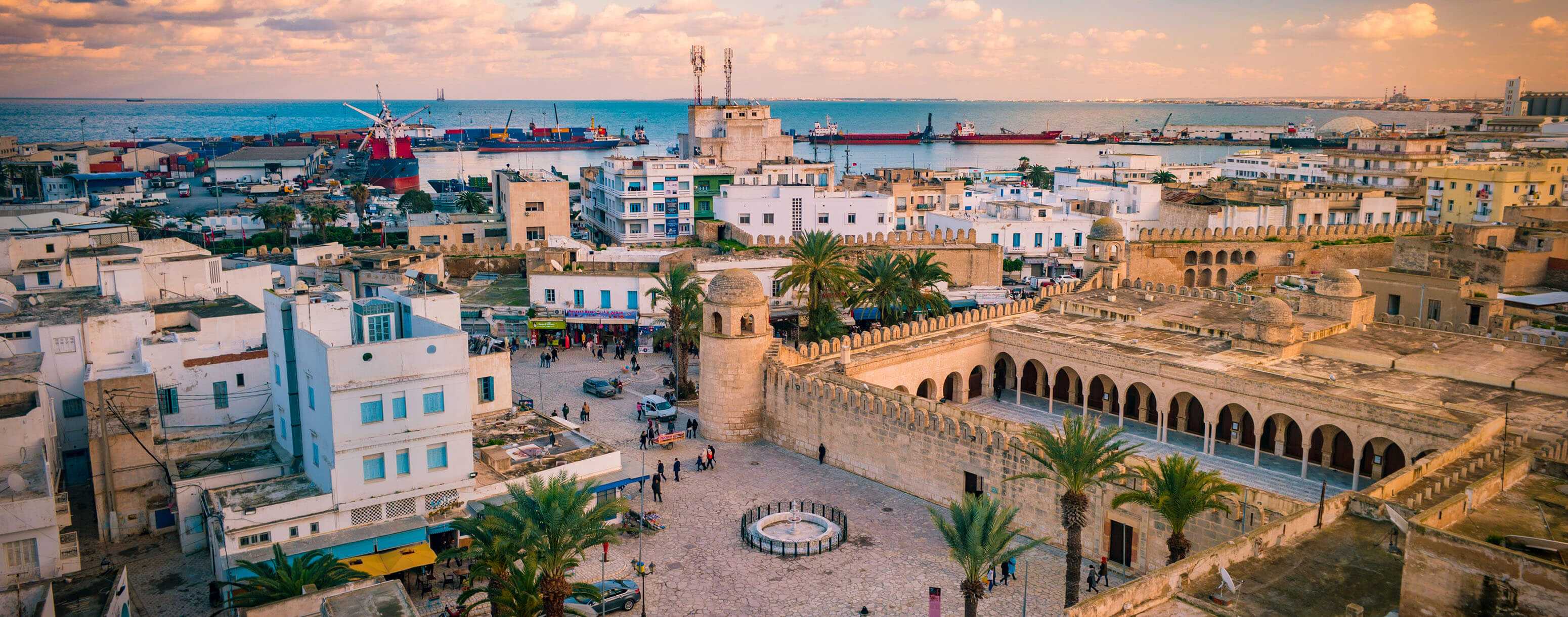
Begin in Tunis with the Medina of Tunis, where narrow lanes, historic buildings, craft shops, and food stalls create an atmospheric introduction to the country. Nearby, Carthage provides a different perspective through its archaeological remains and coastal setting. Allow several hours rather than trying to rush both areas.
Sidi Bou Said, known for its white buildings and blue details, is an easy addition to a northern Tunisia itinerary. Go earlier in the day for a calmer walk, then continue toward the coast for views and cafés. The village is popular, so prices for drinks and souvenirs can be higher than in ordinary neighborhood markets.
For Roman history, El Jem is one of the country's essential stops. Its massive amphitheater makes a strong day trip from Sousse or Monastir, although travelers should calculate return transport before setting out. In southern Tunisia, Tozeur works as a base for palm-oasis walks, desert excursions, and journeys toward Chott el Jerid, the large salt lake between Tozeur and Kebili.
The Sahara is not one single attraction. Depending on the route, an excursion may include Douz, a 4x4 drive, sunset over dunes, a desert camp, or a visit to locations associated with film productions. Ask operators exactly what is included. A low advertised price may exclude meals, transfers, guide fees, or overnight camping.
For beaches, Hammamet is a convenient choice for travelers who want a classic resort atmosphere and easy access to restaurants. Sousse combines beaches with a lively urban setting and a historic medina. Djerba is better suited to travelers seeking a slower island rhythm, broader resort beaches, and time around Houmt Souk and Midoun. Beach conditions, cleanliness, and crowd levels vary by season, so inspect recent local reviews before booking.
What to Eat and What Meals Cost
Tunisian food is flavorful, affordable, and often based on vegetables, seafood, bread, olive oil, eggs, and spicy harissa. A casual breakfast with coffee, bread, and a pastry may cost about 5-12 TND. A simple local lunch in a modest restaurant can often fit within 10-25 TND, while a seafood meal or tourist-area restaurant may cost 30-70 TND or more.
- Brik: A crisp pastry commonly filled with egg, tuna, potato, or herbs; usually around 4-10 TND depending on the venue.
- Couscous: Portions with vegetables, chicken, lamb, or fish may range from 15-35 TND in ordinary restaurants.
- Fricassé: A fried sandwich with tuna, egg, potato, and harissa, often about 5-12 TND.
- Ojja or shakshuka-style dishes: Expect approximately 12-25 TND for a filling serving.
- Mint tea and coffee: Commonly around 3-10 TND, with higher prices in scenic cafés and resort areas.
Drink bottled water when you are uncertain about local water conditions, particularly while traveling through remote desert areas. In restaurants, ask whether bread, starters, and service charges are included. Markets are excellent for fruit and snacks, but wash produce carefully and use normal food-safety judgment.
Seasons, Etiquette, Safety, and Transport
Spring and autumn are usually the most comfortable periods for combining cities, ruins, beaches, and desert travel. Summer suits beach-focused trips but can be intensely hot inland, especially around Tozeur and the Sahara. Winter is often more affordable and pleasant in the south, although evenings can be cool and some beach facilities may operate on reduced schedules.
Dress modestly when visiting religious sites, rural communities, and traditional neighborhoods. Ask before photographing people, especially market sellers and families. Use the right hand when offering or receiving items, keep voices moderate in places of worship, and avoid assuming that resort customs apply everywhere.
For safety, keep copies of travel documents, use reputable taxis or prearranged transfers, avoid displaying large amounts of cash, and check current government travel advice before departure. Desert routes require extra planning: carry water, share your itinerary, and use an established operator rather than attempting remote areas alone. Travelers should also confirm entry requirements, insurance coverage, and local emergency contacts before flying.
Within cities, taxis can be practical, but agree on the fare or confirm that the meter is being used where applicable. Trains and intercity buses can connect major destinations, while louage shared minibuses are widely used for regional travel. Private transfers may be worthwhile for multi-stop routes, particularly when combining El Jem, the coast, and southern destinations.
Flight Booking Tips for a Lower-Cost Trip
Start flight booking by comparing several arrival options rather than focusing only on Tunis. Tunis-Carthage is the main gateway for northern itineraries, while travelers heading directly toward beach areas may compare nearby regional airports and transfer costs. A cheaper ticket is not necessarily cheaper after baggage, airport transfers, overnight stays, or long ground journeys are added.
- Search flexible dates around peak summer, public holidays, and major school breaks.
- Compare one-way combinations with a traditional return ticket, but check baggage and connection rules carefully.
- Book accommodation with free cancellation when possible while monitoring flight prices.
- Allow generous connection time when separate tickets are involved.
- Check the final currency, baggage allowance, payment fees, and refund conditions before confirming.
- Keep the first night simple and near reliable transport if your arrival is late.
A realistic daily budget for a careful independent traveler might be 100-180 TND for a cheap hotel, local meals, city transport, and modest sightseeing, excluding international flights and major desert excursions. A mid-range plan may require 250-450 TND per day. Keep a reserve for taxis, unexpected transfers, and changing excursion prices.
Plan Your Tunisia Adventure
The strongest itinerary balances cities, coast, culture, and the south instead of spending the entire trip in one resort. A first visit could use Tunis for two nights, Hammamet or Sousse for the coast, an El Jem excursion, and several nights in Tozeur or Djerba if time allows. Travelers with less time should choose either the northern coast and heritage sites or a focused southern desert route.
Compare cheap hotels, flight booking options, local transfers, and travel essentials through tazmall.shop, the booking and shopping platform for organizing your Tunisia adventure. Check the latest availability and conditions before purchase.
This article was researched and written by the AI of aigpt4chat.com.